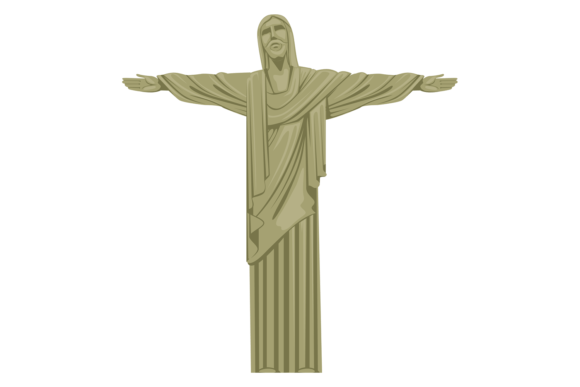
Jesus Christ Statue: Brazilian Travel Icon Graphics & Illustrations
When I first opened the Jesus Christ Statue. Brazilian Travel La graphic design asset, I immediately recognized its potential for editorial and web use. This cartoon-style illustration of Rio de Janeiro’s most iconic landmark offers a clean, approachable visual that strikes a balance between playful and reverent. As someone who has built and designed content websites for over a decade, I know that the right illustration can make or break a reader’s first impression. This asset, featuring the Christ the Redeemer statue as a Brazilian travel landmark cartoon icon isolated on a white background, delivers a mood that is both educational and friendly. It feels modern without being overly trendy, and it carries a subtle warmth that invites clicks rather than repelling them. For bloggers, publishers, and digital marketers working in travel, culture, religion, or South American content, this illustration is a strong candidate for your design assets library.
What I appreciate most is the editorial clarity. The isolated white background means you can drop this graphic into almost any layout without fighting with existing colors or gradients. The cartoon style is polished enough for professional websites but retains a hand-drawn charm that works beautifully on lifestyle blogs, educational platforms, and even affiliate content about Brazil travel. If you are creating a digital guide about Rio de Janeiro, a lead magnet for Portuguese language learners, or a Pinterest pin for a travel itinerary, this graphic design asset sets the right tone. It does not scream “stock illustration” — it feels custom, which is exactly what you want when building brand identity for a small business or a content website.
How This Illustration Fits Into a Real Publishing Workflow
Let me walk you through a typical content publishing scenario. Imagine you are a travel blogger preparing a series of articles about South American destinations. You need a featured image for your Rio de Janeiro post, a Pinterest pin for the same article, a category thumbnail for your Brazil section, and a small icon for a newsletter banner. The Jesus Christ Statue. Brazilian Travel La asset can serve all four of those roles. The EPS, JPG, SVG, and transparent PNG formats give you flexibility across platforms. The SVG version scales perfectly for responsive web design, while the transparent PNG is ready for layering over hero images or colored backgrounds in your Canva templates or Adobe layouts.
For the blog featured image, I placed the statue icon on a soft gradient background with bold headline text overlaid. The visual hierarchy worked immediately — the statue drew the eye, and the text sat cleanly beside it. For the Pinterest pin, I used the transparent PNG over a teal background with a simple serif font for the title. The illustration gave the pin a recognizable focal point that improved click-through potential. In my experience, travel content with strong visual anchors like this asset performs better in search and social feeds because readers instantly understand the topic. The Jesus Christ statue is globally recognized, so using this graphic design asset reduces cognitive load and builds reader trust from the first glance.
Beyond blog posts, I tested this asset in a digital guide about Brazilian culture. The guide included downloadable printables, worksheets, and a media kit for affiliate partners. The statue icon worked as a chapter divider and as a small accent on the cover page. The cartoon style kept the guide feeling approachable rather than academic, which is important for online educators and course creators who want to engage a broad audience. If you are a creative entrepreneur selling travel-themed digital products, this illustration can strengthen your brand identity across multiple touchpoints.
Where This Graphic Design Asset Delivers the Most Value
After testing the Jesus Christ Statue. Brazilian Travel La in several real layouts, I found it performs best in these specific publishing contexts:
- Hero images and article headers — The isolated composition makes it easy to combine with background textures, gradients, or photographic elements. It adds a handcrafted editorial quality that feels more personal than a stock photo.
- Pinterest pins and social media graphics — The bold silhouette and clean lines hold up well at small sizes. On mobile feeds, the statue remains recognizable, which is critical for stopping the scroll.
- Category thumbnails and blog graphics — For websites with multiple travel categories, using this icon consistently for Brazil-related content creates visual hierarchy and category recognition. Readers will associate the illustration with South American travel over time.
- Newsletter headers and lead magnets — The friendly cartoon style reduces the formal feel of email marketing. It works well in opt-in freebies, digital guides, and content upgrades where you want to appear welcoming.
- Canva templates and printable designs — Because the asset comes in multiple formats, you can easily import it into Canva, Affinity, or Adobe tools. I used the transparent PNG to create a set of social media templates for a travel affiliate blog, and the results looked polished without requiring advanced design skills.
From a commercial design perspective, this asset supports stronger first impressions, clearer visual hierarchy, and more professional-looking content pages. It also helps with consistent branding across a website. If you are building a travel niche site or a cultural blog, having a dedicated illustration for key destinations makes your content instantly recognizable. That kind of visual identity is hard to achieve with generic stock photography.
Where to Use This Illustration with Caution
No graphic design asset is perfect for every scenario, and I always advise fellow publishers to test before committing. The Jesus Christ Statue. Brazilian Travel La has a cartoon aesthetic that may not suit every niche. Here are a few contexts where I would use it carefully:
- Small mobile thumbnails — At very small sizes, the fine details of the statue — such as the outstretched arms and base — can become muddy. If you plan to use it as a 50x50 pixel icon, test it first on an actual phone screen. You may need to simplify the image or increase contrast.
- Text-heavy blog images with low contrast — The white background of the original file means you need to place it on a contrasting surface. If your blog layout uses light gray or pastel backgrounds, the illustration may blend in and lose impact. A dark or saturated background works best.
- Serious professional or corporate content — For legal, financial, or medical websites, the cartoon style may feel too casual. The same applies to corporate branding that requires a minimalist or ultra-serious visual system. In those contexts, a photographic or line-art version of the statue would be more appropriate.
- Busy layouts with multiple graphics — If your page already has several illustrations, icons, or photographs, adding this statue may compete for attention. Use it as a hero element or a single accent rather than one of many competing visuals.
For websites that need a very minimal visual system, this asset might feel too decorative. However, for most travel, culture, education, and lifestyle publishers, the cartoon style is a strength, not a limitation.
Practical Publisher Notes Before You Download
Before you add the Jesus Christ Statue. Brazilian Travel La to your design assets library, take a few practical steps to ensure it works in your real publishing workflow. First, test it on both desktop and mobile screens. The SVG format is ideal for responsive web design, but always preview the asset inside a real blog layout to confirm it scales correctly. Second, check how it looks as a thumbnail. If you plan to use it in category grids or archive pages, resize it to your typical thumbnail dimensions and evaluate whether the statue remains clear and recognizable.
Third, test the illustration with headline text. Place it beside a serif font, a sans serif font, a script font, a handwritten font, and a display font to see which combinations create the best visual hierarchy. In my tests, the statue paired best with a clean sans serif font for modern travel blogs and with a classic serif font for editorial or educational content. The handwritten and script fonts felt too busy alongside the cartoon style, so I would avoid those unless you are going for a very playful look.
Fourth, check contrast and readability. The statue is dark on a white background, but if you invert the colors or place it over a busy photo, you may lose the silhouette. Try it in black and white to ensure the shape holds up without color cues. Fifth, review the file size for web performance. The SVG and EPS formats are lightweight, but the transparent PNG can be larger. Compress images properly before uploading to your site to maintain fast load times. Finally, confirm the commercial license before using this graphic design asset on monetized websites, affiliate pages, or paid content products. Most creative marketplaces offer clear licensing terms, but always double-check that your intended use — whether for a digital guide, a lead magnet, or a media kit — is covered.
Final Thoughts on This Brazilian Travel Illustration
For bloggers, publishers, content creators, website owners, digital marketers, newsletter creators, online educators, affiliate marketers, designers, small business owners, and creative entrepreneurs, the Jesus Christ Statue. Brazilian Travel La is a versatile and reliable graphic design asset. It supports editorial quality, strengthens brand identity, and improves the visual presentation of blog posts, social media graphics, digital products, and downloadable resources. The cartoon style is approachable without being childish, and the multiple file formats make it easy to integrate into any creative design workflow. Whether you are building a travel niche site, designing a Canva template for a South America guide, or creating a Pinterest pin for a cultural article, this illustration delivers a polished, clickable result that builds reader trust and category recognition. Add it to your design assets collection, test it in your real layouts, and watch how it elevates your content marketing across every channel.